The night before I leave — what it actually feels like
The flat is empty. The oven is in storage. Tomorrow I get on a train. This is what it looks like when you finally stop waiting.
read on substack →
“Fear doesn’t stop you directly.
It just gives you very good reasons to wait.”
Vienna — February 2026
The flat is cleared. The job is gone. The oven is in storage.
In two weeks I leave. No fixed plan. No guarantees.
Just a pizza peel, a train ticket to South Tyrol, and the belief that making something with your hands — and sharing it with strangers — is more useful than anything I did in seven years of spreadsheets.
scroll to continue
alto adige → vienna → israel → the road
Pizza is the excuse. The table is the point. I use it to pull strangers together — and something always happens once the dough comes out.
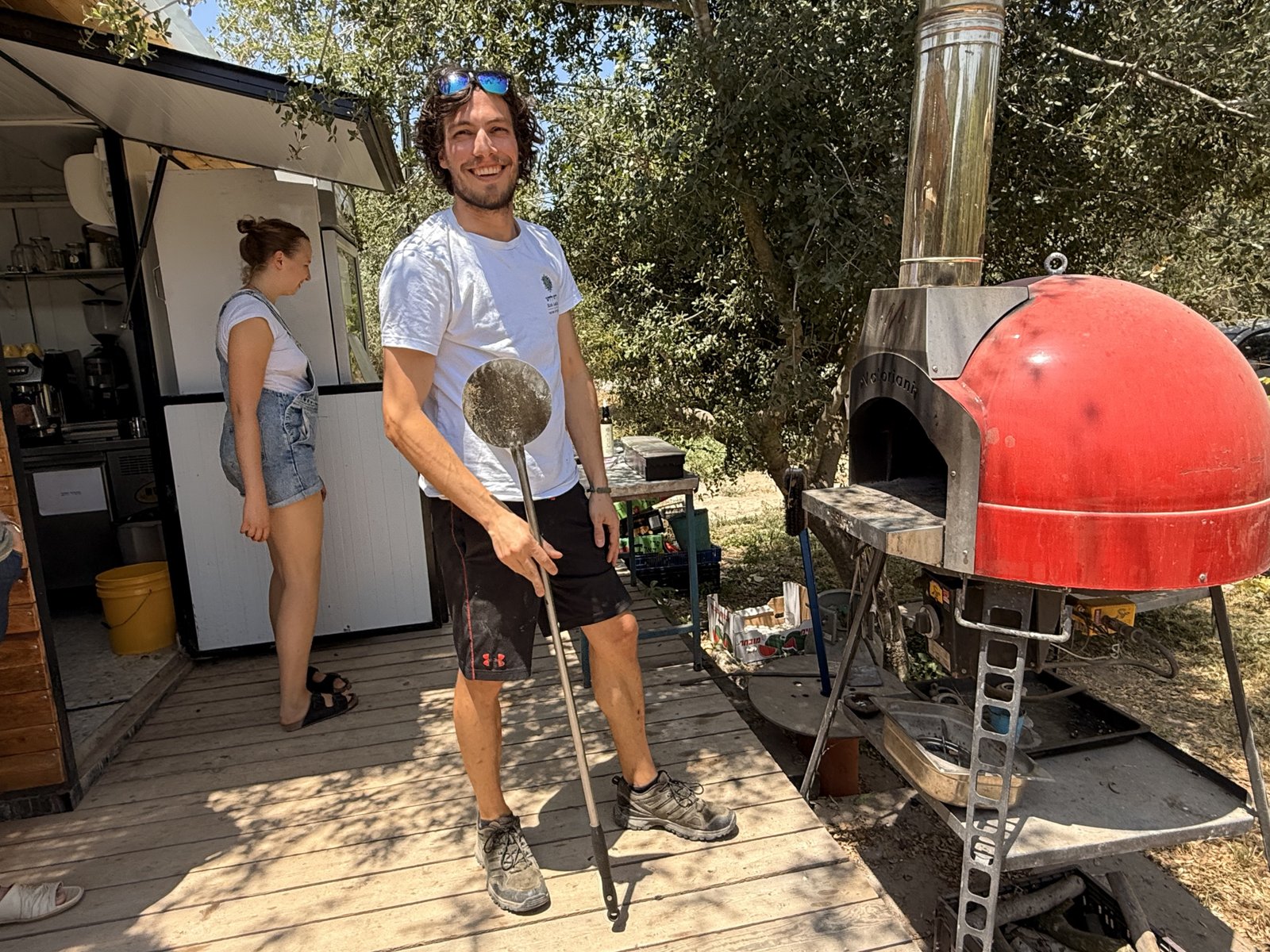
Tsipori, northern Israel — May 2025
the story
chapters
I grew up in Alto Adige — the northernmost tip of Italy, wedged between Austrian and Italian identity for so long it stopped arguing and became something else entirely. Tyrolean dumplings and Sunday pasta on the same table. Nobody found that strange.
The table was where everything happened. You never ate alone. If you arrived and someone was eating, they made you a plate. That wasn’t a rule anyone stated. It was just how life worked.
I absorbed another rule without knowing it: you don’t make good pizza at home. Pizza belongs to professionals. To ovens you don’t own. So I didn’t question it.
That one took twenty years to unlearn.
I ended up in a technical high school, then Vienna, then a degree I wasn’t sure I wanted, then an e-commerce job that made complete sense on paper.
The subjects I was actually good at were German and history. The questions that kept me up were about how we want to live together. The technical work gave me no grip on any of that. But it paid the rent. So I stayed.
Seven years. By the time I left, we were shipping fifteen containers a week — three hundred pallets, stacked they’d reach the Empire State Building. On a spreadsheet it was just a number that had gotten larger.
The work itself? It could have been done by anyone. Probably soon will be.
Around the time I was looking for steadier work, I got sick. Chronically, seriously, in a way that rearranges your thinking about the future. What if it comes back? What if I can’t work? What if I become a burden?
So when a startup offered a stable income and social security coverage, I said yes without hesitation. I had ideas. A lot of them. But I never acted on them alone.
That’s how it works. You’re not miserable enough to quit. Not fulfilled enough to stay. And the years pass quietly — not wasted in any obvious way, just exchanged, year by year, for the comfort of not having to explain yourself.
I’m not angry about it. I understand it. I just don’t want to go back.
By April 2024 I knew I wanted out. I just didn’t know how to do it without losing everything I’d built to protect myself.
So I tried the side door. A few colleagues and I founded a company together — B2B textiles. We had the contacts, the logistics knowledge, the opportunity. And more than that, it let me tell myself I was doing something without actually burning anything down.
That’s the thing about side doors. They feel like courage. But they’re usually still a form of caution. You’re not choosing the thing you actually want — you’re choosing a safer version of wanting something different.
The textile company ticked along without catching fire. And in the meantime, October 7th happened.
I’d been to Israel before — a road trip in 2014, then Tel Aviv for my thirtieth birthday in 2022. Good food, good people, easy warmth. The kind of place you return to without needing a reason.
Watching the news after the attacks, scrolling and refreshing, I arrived at a thought that felt almost embarrassingly simple: watching is useless. So I asked myself what would actually help. The only honest answer was: go there. Do something. Anything.
I tried the usual volunteer platforms. No response. A country at war doesn’t wait for paperwork.
So I went back ten years through my phone. An Israeli guy I’d met once at a Christmas market in Vienna — barely an acquaintance. I texted him. Five minutes later he sent back a number. I called. Brief, practical exchange. Worst case I lose twelve days of holiday leave. That felt like a risk worth taking.
Tel Aviv. Bus, train, no sleep. Then north to Tsipori, a small moshav near Nazareth.
I remember standing in the heat thinking: this looks nothing like I expected. The foreman spoke Arabic. Someone else was on the phone in Hebrew. I was standing there holding Austrian waffles I’d brought as a gift — no particular reason, it had just felt right — thinking: what if nobody here speaks English?
First day: sorting avocados. Meeting people. Getting used to the noise and the dust and the languages I couldn’t follow.
They did speak English. The waffles disappeared within the hour. And just like that, I stopped being a stranger.
The work wasn’t glamorous. Painting railings. Cleaning machines. Spreading organic fertiliser on fields. Farming — properly, physically, the kind of work where at six in the evening you can point at something and say: that’s done. I did that.
Then Ayala explained what they were actually doing.
Ayala is the eldest daughter of the farm’s founders. After October 7th she didn’t want to sit still. She saw what was needed — displaced families, fields full of produce going to waste — and with the Israeli instinct of yalla, let’s go, she built something from scratch.
The NGO is called From Soil to Soul. The reality most people don’t see: somewhere between thirty and forty percent of farming produce never reaches the market. Not because it’s bad — because it’s not perfect enough to sell. Too small, too irregular, too expensive to harvest relative to what it fetches. So it stays in the field, while people who can’t afford supermarket prices go without.
That gap is where the NGO operates. Volunteers collect what’s left. It gets sold cheaply to cover costs, or given away, or fermented into jam. Nothing wasted if it can be helped.
This is still the model I want to replicate. Wherever I go.
Back in Vienna that summer, still going to the spreadsheets every day, I ended up at a dinner where someone made me a pizza that stopped me mid-bite.
His name was Emilio. He had potatoes on top of it.
In Italy, that’s not just unusual. It’s a provocation. But it was extraordinary — light, airy, a fluffy crust and a crisp thin base. You could watch him stretch the dough and the fact that he was doing it at home, in a regular kitchen, made it more impressive, not less.
I asked him to teach me. He sent me YouTube links. “Try it in your oven,” he said. “See what happens.”
The first four or five doughs were completely unusable. But something was different this time. I didn’t stop. I went back the next day, and the day after. Emilio would become one of my closest friends. He wasn’t just showing me a technique — he was handing me something I hadn’t known I was looking for.
I was supposed to fly home the morning Iran fired ballistic missiles at Israel.
The night before, I’d stayed up late making dough. I went to sleep planning to leave. I woke up to no flights. While everyone else was glued to the news, I was in the kitchen finishing the dough. Someone asked what I was doing.
“We’re still making pizza.”
For twelve days, stuck, we made pizza for friends and family and on the weekends for people from the village. Between rocket alerts and sirens. When the siren hits you run, the big iron door closes, and you wait. Some people had brought chairs. Some sat on the floor. Some kept scrolling.
I sat there thinking: this is insane. Outside: summer, life, normality. Inside: concrete, strangers, silence.
And then a thought arrived. Not dramatic. Not philosophical. Just clear:
Going back to Vienna wasn’t heroic. It was uncomfortable. Because once you decide something like that, reality shows up fast.
I didn’t resign the next day. I hesitated — of course I did. The health history was still there. But the pull was stronger than the fear this time. I sat down with my boss and told him I was leaving. He offered a consulting arrangement as a bridge. I took it.
Then the flat. Finding someone to take over the lease. Organising seven years of accumulated life into boxes. Closing down the textile company.
February 2026. Flat gone. Life cleared.
The plan was Israel — return in April as a volunteering pizza chef on the food truck. Those plans are postponed. So instead: yalla. A pizza tour through Europe. South Tyrol first, to see my family and build something on the farm. Then wherever the next table is.
I don’t have it all figured out. I don’t think I ever will. A lot of us never will. That’s not a problem. That’s just what it looks like when you actually start.
the pizza
Neapolitan style — the big crust, the high heat, the fast bake. But I care more about what happens in your mouth than what it looks like on a screen.
Pizza is amazing for social media. People go crazy for it. The stretch, the char, the leopard spots. I get it. But what I’m actually chasing is the moment someone takes a bite and goes quiet. That silence. When your taste buds just take over and your brain stops performing.
A few selected ingredients that taste awesome. No truffle oil. No Instagram-optimised garnish. Just dough that’s had time to ferment properly, a sauce that doesn’t fight the other flavours, and whatever is real and local and in season.
That’s it. That’s the whole philosophy.
The pizza is also the opener. Once people are at the table — strangers, colleagues, whoever showed up — something happens that no meeting or workshop can manufacture. The discussion unfolds by itself. I just try to keep it going in the right direction.
Pizza is the excuse
The table is the point. Get people around it making something together and the rest follows.
Taste over optics
Your taste buds don’t care what it looks like. Neither do I. We aim for the quiet after the first bite.
Local and imperfect
Whatever is in season, whatever is real, whatever a farmer couldn’t sell because it’s the wrong shape. That’s the best ingredient.
Be kind. Be useful. Be of service.
A charity dinner to raise funds. A workshop for kids who struggle. A pizza in a field in northern Israel. Same idea, different table.
the tour
The original plan was to return to the food truck in Israel in April. Those plans are postponed — Israel went back to war. So instead of waiting, I’m starting where I can.
May 1st: a pizza event with my people in Vienna. A proper send-off. Then a train south to Alto Adige — South Tyrol — to see my grandparents, make pizza with the family, and start building something on the farm. Maybe a stone oven. We’ll see.
After that, the road. City by city, table by table. Pop-up events, workshops, charity dinners. Documenting it all as it happens. When the door to Israel opens again, I’ll walk through it.
Until then, there’s a continent full of kitchens.
May – Oct 2025
Tsipori, Israel
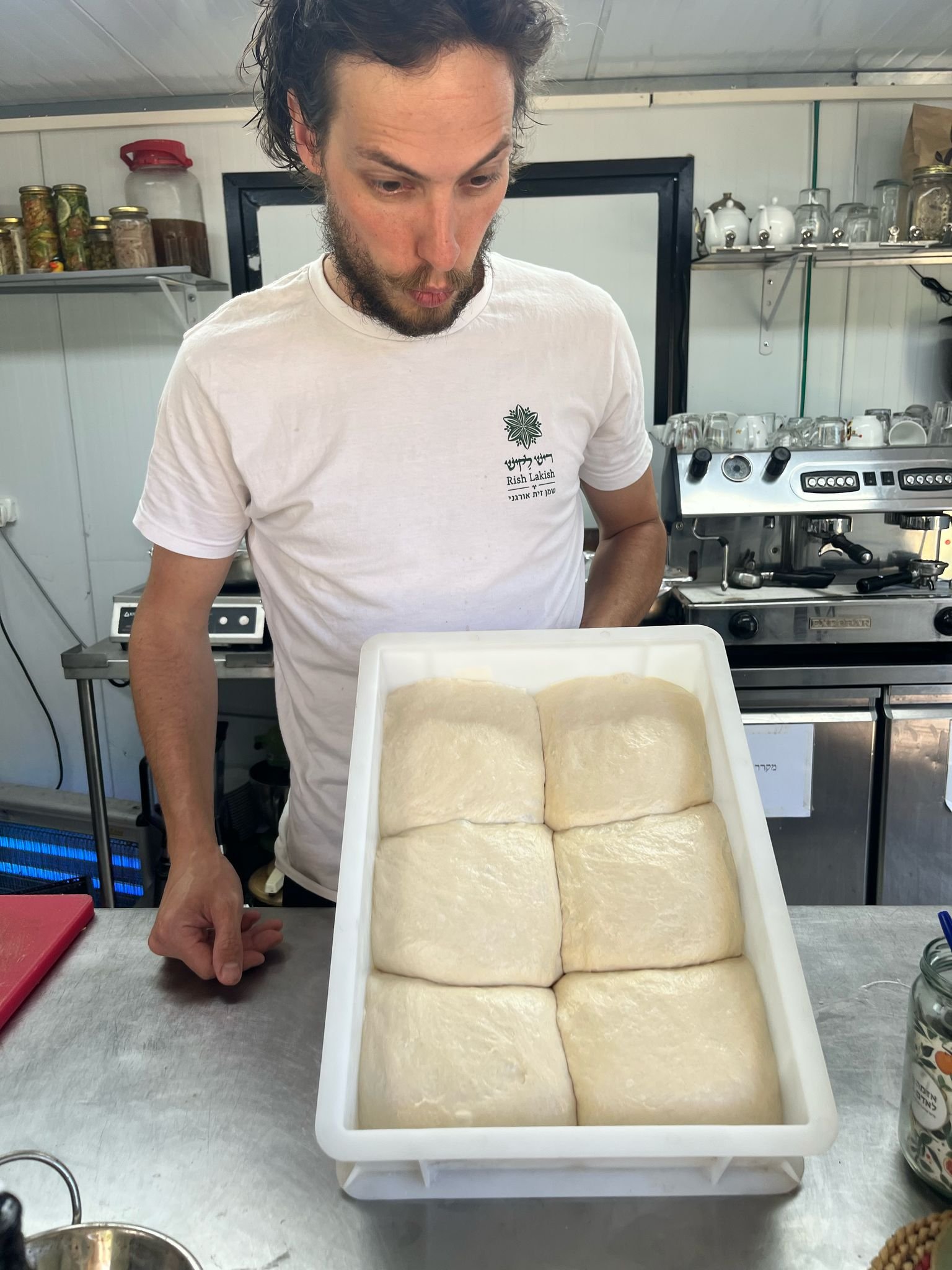
First real pizza on Ayala’s food truck. Failed dough on day one. Kept going.
Oct 2025 – Apr 2026
Vienna, Austria
Clearing the flat. Closing the textile company. Buying an oven. Practising. Deciding.
1 May 2026
Vienna → departure
Pizza event with the crew. Then the train south. It starts here.
May 2026
South Tyrol, Italy
Family. Grandparents. Pizza without the professional oven. Building something on the farm.
Summer 2026 →
Europe. Wherever next.
Follow along on Instagram or Substack to find out where the dough lands.
interactive map coming — Leaflet.js
support the project
No VC funding. No corporate sponsor. No backup plan. If the idea resonates — if you’ve ever felt the pull to stop waiting and make something real — here’s how to help it happen.
best way to help
You bring the people. I bring the dough, the oven (or work with yours), and the story. Works for private dinners, company events, community gatherings, charity nights. No kitchen too small. No group too unusual.
A charity pizza dinner to raise money for something you care about. A workshop for kids who struggle with learning. A team event for people who’ve had enough of trust falls. All of it works. Get in touch and we figure it out.
get in touch →keep the tour moving
Every contribution covers a real cost on the road. No padding, no overhead — just flour, travel, and keeping this thing alive long enough to matter.
0
supporters so far — be the first
from the road
Every post lives on Substack — its own URL, findable on Google, straight to your inbox if you subscribe. No algorithm between you and the writing. The first real post goes up the night before I leave Vienna.
subscribe free →add photo here
The flat is empty. The oven is in storage. Tomorrow I get on a train. This is what it looks like when you finally stop waiting.
read on substack →add photo here
Too hydrated, wrong conditions, nowhere to hide. What day one at the food truck actually looked like.
read on substack →add photo here
Thirty to forty percent of farm produce never reaches the market. Here’s where it goes, and the woman who built the system.
read on substack →